A Simple Cactus Care Routine: Weekly, Monthly and Seasonal Checks
A practical routine built on looking, not on doing: a quick weekly glance, a soil check before any watering, a closer monthly look and a review at each change of season.
Simple Guides for Growing Healthy Cacti
Beginner-friendly guides to watering by soil dryness, light, gritty soil, pots with drainage and working out what your cactus needs.
New to cacti? Read these four guides in order.
New to cacti? Learn how the plant is built, the four conditions that decide most outcomes, and what to do in the first two weeks with a new plant.
Find out what direct sun, bright indirect light and low light really mean, how to judge your own windows, and how to tell when a cactus is getting too little or too much.
A reliable way to water a cactus without a calendar: wait until the mix has dried through, soak it until water runs from the drainage hole, drain, and wait again.
What a cactus mix should contain and why: the job of each ingredient, a simple starting ratio to adjust for your home, two quick tests, and what to leave out.
What cacti need, easy plants to begin with and the mistakes worth avoiding.
A practical routine built on looking, not on doing: a quick weekly glance, a soil check before any watering, a closer monthly look and a review at each change of season.
Whether a cactus needs feeding at all, when a little fertilizer helps, when to hold back, and the signs associated with giving too much.
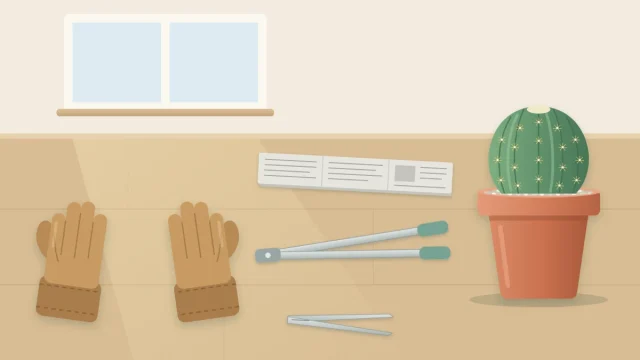
Straight spines, hooked spines and glochids each need a different approach. See which tools keep your hands away from a cactus, how to lift a potted plant out and set it down, and what to do if you get spined.
Ten habits that hold cacti back, from watering by the calendar to oversized pots and sudden sun, with the reason each one matters and what to do instead.
How to water by checking the soil, and how to tell too much water from too little.
Deep ribs, a wrinkled body and a very light pot often point to thirst, but damaged roots can look the same. See how to tell them apart, how to re-wet mix that sheds water, and how to rehydrate a cactus without overdoing it.
A swollen, pale or soft cactus may have had too much water, but no single sign proves it. Learn which checks confirm it, what keeps a pot wet for too long, and the steps to take before and after you look at the roots.
The surface of a pot dries long before the bottom does. Here are simple ways to check moisture at depth, with a wooden skewer, the weight of the pot, the drainage hole and the plant itself, so you know when the mix is truly dry.
A reliable way to water a cactus without a calendar: wait until the mix has dried through, soak it until water runs from the drainage hole, drain, and wait again.
How much sun cacti need, why they stretch and how to move a plant into brighter light gradually.
A staged way to move a cactus to a sunnier window or outdoors for summer: what sunburn looks like, how to raise the light step by step, and when to slow down.
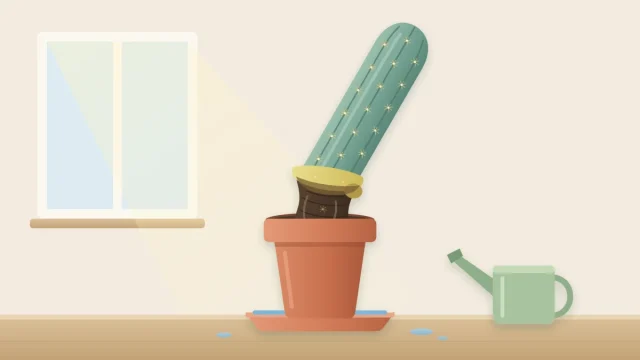
A thin, pale, pointed top means a cactus has been growing in too little light. Learn how to spot stretching early, why the narrow growth is permanent, and the options you have, from brighter light to simply accepting the shape.
Find out what direct sun, bright indirect light and low light really mean, how to judge your own windows, and how to tell when a cactus is getting too little or too much.
Gritty soil mixes, choosing a pot, drainage holes and repotting without rushing the plant.
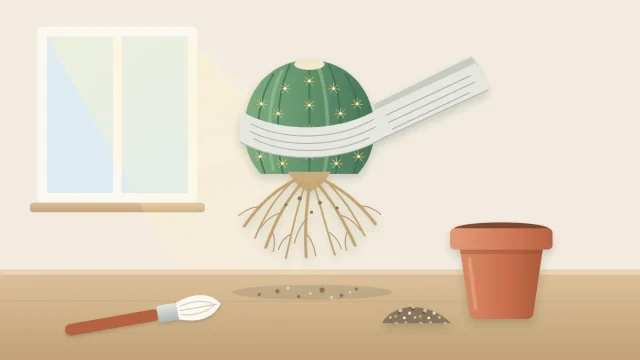
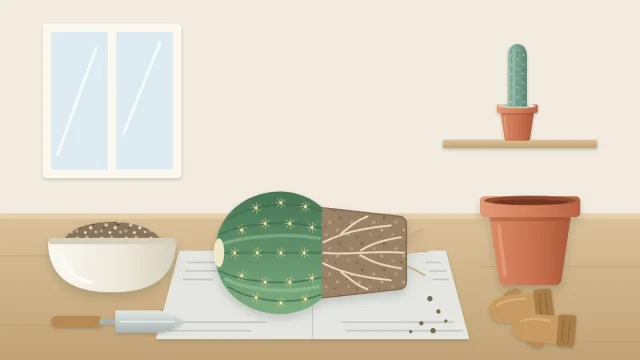
How to slide a cactus out of its pot for a root check, what healthy, dry, rotted and root-bound roots look like, and how to put the plant back with minimal disturbance.
When a cactus needs a new pot, how to get it out without getting spined, how deep to set it in fresh gritty mix, and why the first watering should wait.
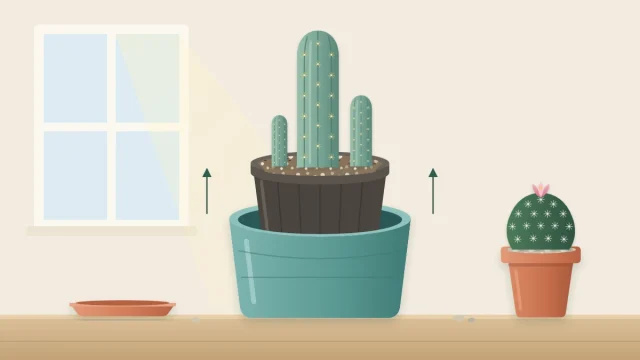
Good drainage means a hole in the pot, an open mix and nowhere for water to pool underneath. Find out why a gravel layer cannot stand in for a hole, how to manage saucers and outer pots, and what to do with a container that has no hole.
How to choose a pot for a cactus: a drainage hole first, a snug size, a material that dries at the right speed, and a shape that matches the roots and keeps tall plants stable.
Soft spots, yellowing, stretching, root rot and pests: possible causes and what to check first.
How to tell mealybugs, scale insects, spider mites and fungus gnats apart on a cactus, what is often mistaken for a pest, and the physical first steps to take before reaching for any spray.
What root rot is, the conditions that lead to it, how to confirm it by looking at the roots and stem base, the rescue steps growers commonly try, and when a plant is unlikely to recover.
Yellow, tan, brown and reddish color changes on a cactus sorted by pattern, with the checks that separate excess water, low light, scorch, normal corking and rot.
Sort a soft cactus by how it feels and where the softness is, then check soil, roots and recent temperatures to tell rot, thirst, cold damage and scorch apart.
How to look after indoor cacti through short, dark days: finding enough light, cutting back water, avoiding cold glass and heater blasts, and bringing outdoor pots in before frost.
Why a cactus stops growing in the cool, dark months, how to recognize a resting plant, what to change in its care, and how to tell when growth is starting again.
A practical routine built on looking, not on doing: a quick weekly glance, a soil check before any watering, a closer monthly look and a review at each change of season.
Whether a cactus needs feeding at all, when a little fertilizer helps, when to hold back, and the signs associated with giving too much.
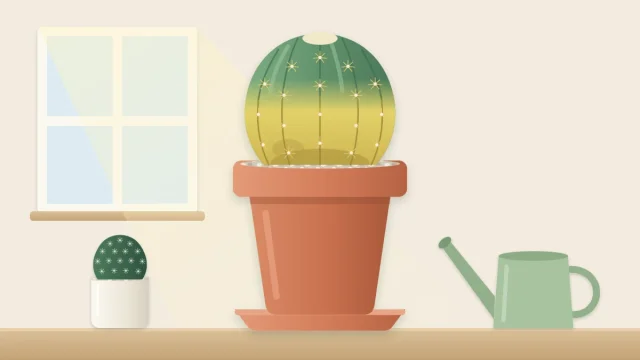
A plain guide to keeping a golden barrel cactus round, evenly golden and firm: the light it needs, how to water it through the year, the right pot and mix, and the troubles worth watching for.
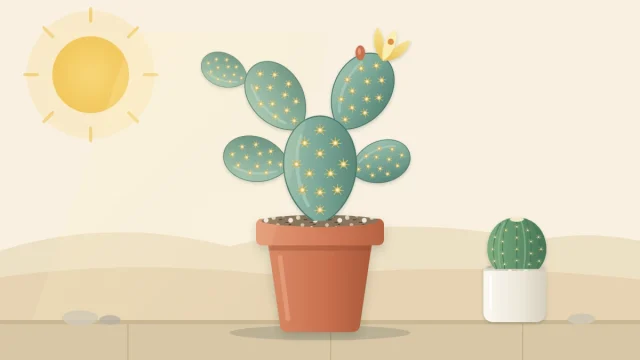
How to grow a prickly pear or bunny ears cactus well: the sun it needs, how to water and pot it, what its pads tell you, and how to move it without picking up glochids.
Every guide is listed on one page, from watering and light to soil, pots and common problems. All of them are free to read, with no sign-up needed.